Is sharing the new currency?

You have it, you can share it. You need it, you can borrow it. Office space, accommodation, cars, books, videos, bikes, presentations, handbags, appliances…

Has all this real world sharing been sparked by the online sharing that is now second nature?

A study released last week, The New Sharing Economy, by Latitude Research and Shareable Magazine, was prompted by the surge in sharing startups driven by social technology.

“The rise of sharing requires us to use a new language where ‘access’ trumps ‘ownership’; social value becomes the new currency; ‘exchanges’ replace ‘purchases’; and people are no longer consumers but instead users, borrowers, lenders and contributors. All of this means businesses must redefine their role from providers of stuff to become purveyors of services and experiences,” says Neela Sakaria, SVP of Latitude.

The study found that people who were sharing online were also more likely to share physical items such as dvd’s, bikes, cars & books with strangers.

But this correlation does not necessarily transfer to an offline to online cause relationship. Perhaps people who are more likely to share in real life are encouraged to head onto the interwebs and share away. Rather than the online sharing activities “spurring” more offline sharing.

Or perhaps ‘sharers’ share wherever they happen to loiter – bookcrossing.com or Prahran library – and with an increase in social technology the opportunities to engage in sharing activities are everywhere.

In short. There is more sharing. Don’t fight it, just share it.

 

The subconscious education of public taste

I was in Paris a couple of weeks ago and was lucky enough to spot a guy mid ‘paste up’ – in the process of posting art – while hanging out at Centre Pompidou.

It just so happens I’d bumped into Eric Maréchal, the founder of a global art project,  Street Art Without Borders, which connects artists with volunteer ‘pasters’, through the power of social media.

Eric @ work

The idea is simple, using Flickr, Eric  finds artists who he admires, contacts them and offers to paste their work up in whatever city he is in.  They send him the works, he pastes them and posts pictures of it back up on to Flickr.

“The fascinating part of that work is also the exchange with the artist, their story, their unique message to the world.”

Many of the artists, he tells me, have never done any street art before.

Artists that traditionally work on canvas or other mediums, find a new way to express themselves and reach a different audience.

Eric, who goes by the name of ‘urbanhearts‘ online, showed me a work by a Chinese artist who he discovered on Flickr.  It was the first time she had done street art, and experimented with local newspapers to paint on, which aside from being easy to post, look incredible.

If you believe that street art has the power to improve well-being, then you’d agree this is one project using social media for good.

To tear the street away from the grey and dreary monotony of neat rows of buildings; to throw a firework of colours into its midst, joy radiating outwards, to convert walls and basements into surfaces to be decorated, and from this wind-exposed museum to deduce that which reveals a race’s personality, and at the same time, the subconsicious education of public taste.

– Preface to the Jules Cheret (France’s first street poster artist) exhibition catalogue at the Theatre d’Application, 1889 in Paris.

Paris 1889 – Jules Cheret                      Paris 2010 – Zhe155

Related Links

iSchoolyards: kids + tech = awesome

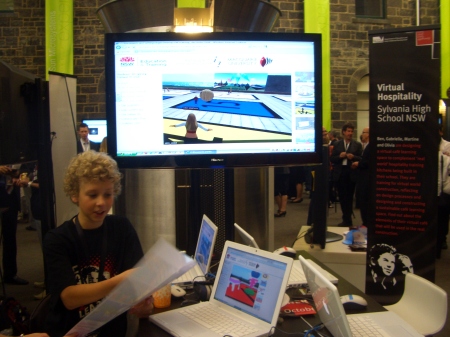
On Monday primary school kids from across Australia gathered at the State Library of Victoria.

The tweenhood from Northern Territory to Tasmania – “our future’s leaders” – came together in Melbourne for one hot topic: digital learning.

From all accounts you’d think they’d been invited to have playlunch with Justin Beiber, the excitement and enthusiasm was that palpable.

The event, ‘Listen2Learners‘ was the anti-thesis to the classic isolated, socially awkward child oft portrayed when we pair kids + technology.

Students showcased a range of awesome projects, from running their own radio station to preparing a cybersafety program for incoming primary students.


photo credit: Tania Sheko


The audience, a mix of business, government and community sector listened on as the kids demoed their creations.  Many had to submit applications for their ideas, and defend their concept against the ‘tough questions’; all processes that exist in my ‘grown-up’ world at work.   Learning to think critically through ideas to creation is a valuable lesson to be learning so early in the game.


Photo credit: Tania Sheko


Funnily enough, an old primary school bud Caz Pringle over at ThinkTank Media wrote a post this week which paints a drastically different image of kids increasing use of technology, the dark side…empty playground swings and a growing spawn of fat, geek kids.


A whole generation of Cartman's?

Could we be incubating a whole generation of Cartman's?


Considering Caz is a fellow Gen-Yer and grew up with the big bad Internets, it’s a surprising and provoking change to hear this side of the coin voiced from someone so well-versed in the WWW. (It’s inspired this post in response, I didn’t make it to the Listen2Learners but I was determined to provide some quality social education examples to alleviate the anxiety of picturing a generation of South Park’s Cartman’s IRL…)

Back to the happy, glass-half full juice.

I’d like to think the future is in good hands. Moreover, we better recognise the present is already in the hands of 7 year olds.

My favourite example was kids from Prospect Primary School who became teachers, and schooled their ol’ teach and 69 other teachers in how to make movies.

Using their experience in making films about animals for ‘zoo-tube’, these students set a challenge for adult learners – to learn movie making from scratch in order to make a one minute movie in one day on location at the Adelaide Zoo.*

Empowering and valuable learning for the kids right there….and, Zoo-tube!

These kids are so cool for school.

Links

The world’s first Emergency Response App

The city has been struck by an 8.2 magnitude earthquake. Homes have been destroyed. People are homeless. There is no food. People are dying. You are an aid worker.  You can save lives.

This week Save the Children released the world’s first Emergency Response App. The game aims to give the player an insight into the decisions a humanitarian worker faces when deployed to a disaster affected area. A fun game with a serious message. Check it out.

Stats: bringing sexy back

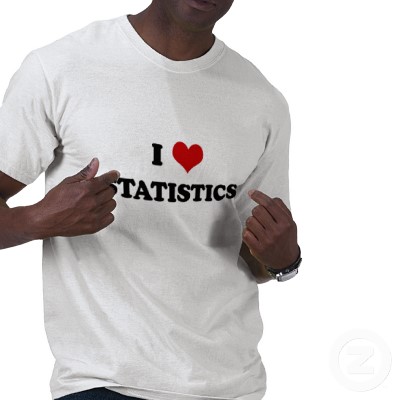
I love statistics tshirtI saw a presentation recently on a small Melbourne start-up kaggle.com.

Basically, kaggle helps organisations solve data-related problems via crowd-sourcing and competitions.  These ‘problems’ aren’t the far-fetched conceptual ones you’d find in a stat textbook like ‘if Mary had 2X pieces of pie multiplied to the power of a rainbow…’

…although the main ingredients sound eerily similar: datasets, graphs, formulas, numbers….more numbers *eyes glazing over*…

WAIT!

Real world is calling and it would like your help.

Kaggle helps sort out the BIG, relevant issues.  For instance, is there is a genetic link to how rapidly HIV progresses to full-blown AIDS?

A biochemist in the US was working on this problem, released the question and data sets via Kaggle and started receiving answers from all over the globe.

In the end, a mathemetician from a neighbouring state won the competition and came up with an awesome model to predict this (with no biochemistry experience at all).

Why wouldn’t you get the world’s best statiticians working against the clock to solve your problem, rather than just Bruce and the geek squad you currently employ?

At the end of the day, with unlimited submissions, the most accurate model wins and you get to keep it.  The rest are kept hidden.  So all seems fair.

What is neat is that Kaggle goes beyond the basics and incorporates a collaborative/community element too – there are forums to chat about the problem/competition, which opens up the opportunity for members to team up with others working on the same problem.

Anthony, the company’s founder, told us that they get a lot of University academics submitting theories/answers.  For them, it’s far more exciting to be working on real-world issues than re-hashing old textbooks.

I couldn’t agree more.  Power to the statisticians, throw out the books, there’s plenty of real-world problems that need answers.

Hal Varian

Image via Wikipedia

“I keep saying that the sexy job in the next ten years will be statisticians”

– Hal Varian, Google’s Chief Economist

Well Hal, as much as this project rocks, only an Economist would say that.

Buy one, give two with Baby Teresa.

Baby Teresa. A great online social business concept. For each onesie they sell, they donate one to a child in need.

So when you need to buy a present for a little tacker pop over to Baby Teresa & check out their cute onesies. Shop for the little ones with a good conscience, knowing that you are also helping another child who really needs it… without even leaving home.

Last week Baby Teresa featured on The Circle. Check out the episode below.

Health is a right. Not a gift.

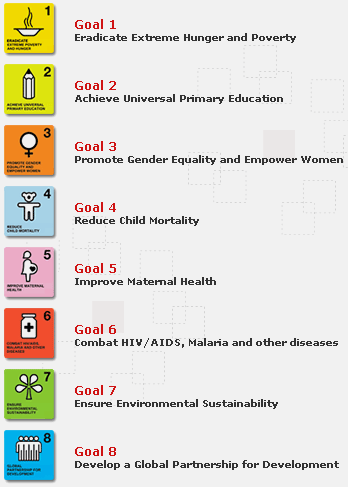
Last week was the DPI/NGO UN Conference in Melbourne. World leaders and delegates from NGO’s spent three days discussing global poverty and getting excited about the potential of taking real action to achieve the Millennium Development Goals… and eating the free sandwiches – lunch included at non-profit gatherings is a rarity.

Some conversations were repeats, many questions were irrelevant, and numerous delegates were on a mission to voice their own agenda.

BUT everyone there wanted to make a difference. Everyone there was driven by the same goal – the idea that making health global should and can be a reality.

Every one of the 1600 delegates turned up because they believe that we can make the world a better place. Yes, we are behind on meeting most of the Millenium Development Goals. Yes, there is concern over whether the government will & support exists to make these goals a reality. And yes, there have been mutterings that setting the goals themselves are futile.

But to have something on paper that gives us a global goal, and to provide opportunities for like minded people to inspire and re-energise each other is more than just a step in the right direction.

Political leaders do, however, need to be held accountable to financial and other commitments that have been agreed upon.  A motivated public, and the media, play a crucial role in enforcing this. Governments need to feel pressure from their people. We need to keep pushing to achieve the MDG’s. In the lead up to the UN MDG Summit in New York in two weeks time this is imperative.

During the conference last week the online troops were mobilised and the #AchieveMDGs hashtag reached almost 800,000 impressions during the 3 day conference.

Currently $1.46 trillion dollars per year is spent on international warfare. It would cost one tenth of this to achieve global health. So keep pushing. Health is a right, not a gift the government chooses to give. As Ban Ki-moon said in a recent report “Our world possesses the knowledge and the resources to achieve the MDGs” so let’s make this a reality.

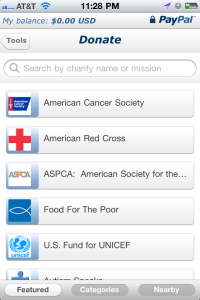
PayPal App: Not just for bills, but for donations too.

Earlier this week PayPal added a donation feature to their iphone app. It lets people donate to more than 23,000 charities in the U.K, U.S. and Canada.

Their aim is to simplify the donation process to allow charities to reach more donors.

Will it open the doors to a new segment of donors? Or are people either givers or not, regardless of how easy it might be for them to open their digital wallet? An interesting one to keep an eye on. Good work PayPal.

Emergency Response 2.0 – Tweet it & they will come.

From large scale natural disasters such as Haiti, to neighbourhood  the-girls-are-stuck-in-the-drain scares, social media is changing the way we communicate in times of emergencies.

We all know twitter is a real time source of communication – exactly what is needed in an emergency response when every second counts. Social media not only facilitates a mass communication outlet for a victim of an emergency but also allows individuals to become part of the emergency response itself.

In a recent study conducted by American Red Cross the majority of online users said they would use social media to seek help for themselves or others during an emergency. And then almost 3 out of 4 people said that they would expect help to come less than an hour after they posted their call for help on twitter or facebook.

Governments and aid organizations are attempting to step up and put resources behind strategies to monitor this valuable online chatter. But whether they currently have the means to effectively use the information coming in is up for debate. Organisations are pushing us back to traditional forms of communication when an emergency strikes, and encouraging the public to use the emergency phone lines for the first point of call over relying on twitter or facebook to instigate a response.

Not only are there questions of monitoring the content, but also the standard authenticity and privacy issues that are tripping up the authorities. (Is little Jimmy, really little Jimmy, and did he fall down the well?)

“The social web is creating a fundamental shift in disaster response – one that will ask emergency managers, government agencies and aid organizations to mix time-honored expertise with real-time input from the public,” said Gail McGovern, American Red Cross president and CEO. “We need to work together to better respond to that shift.”

There is no doubt that social media is an invaluable resource for local emergency teams, governments and international aid organisations. And the more reliant that we as the public become on the inter-web for day -to-day comms, the heavier the reliance will be on it during a time of emergency. But how the public and the experts can work together to leverage the benefits of this live feed of situation updates is the question.

Would you expect some-one to respond if you posted a call for help on twitter?


24,000 mothers will lose a child today.

We take access to quality health care for granted. Even if you refuse to pay for private health cover, and complain about the waiting times in the public system, you still have medicare and a qualified doctor is never too far away.  You can also pick up the phone and chat to a qualified nurse about a weird stomach cramp at any hour free of charge or do self-diagnosis via google. Accessible medical assistance does save lives, and not everyone is privy to such a service.

Every year 50 million woman in the developing world give birth with no professional help and 8.8 million children and newborns die from easily preventable or treatable causes. 24,000 mothers mourn the loss of a child each and every day.

If these woman and children had access to health professionals millions of lives would be saved. And then if these trained health professionals had access to technology… well the ripple effects would be remarkable. As discussed in the PSFK Future of Health Report, recent advances in technology could dramatically decrease the barriers to medical advice in less developed markets.

The State of the World’s Mothers Report 2010, ranked 160 countries based on mothers’ and children’s health, educational and economic status. Norway ranked number 1, Australia 2, the U.S. 28 and Afghanistan last.  The differences between Australia and Afghanistan are so severe, they are not even comparable – check out the table below.

Australia Afghanistan
Average years of formal education a woman receives 21 4
Number of children that die before the age of 5 1 in 166 More than 1 in 4
Risk of maternal death 1 in 13,300 1 in 8
Average female life span 84 44

The varying level of access to qualified health professionals corresponds directly to the level of health of woman and children in particular.

Trained health workers are present at pretty much every birth in Australia, in comparison to only 14% of births being attended to in Afghanistan.

Over the last 20 years certain developing countries have shown that through investing in training of female health workers lives are saved. Bangladesh has reduced its under-5 mortality rate by 64% due to tens of thousands of female health workers who have promoted family planning, safe motherhood and essential care for newborns. Nepal has achieved similar reductions in maternal and child mortality as a result of training 50,000 female community health volunteers in rural areas.

The role that technology could play in expanding the network of health workers in developing countries, and strengthening their skills and impact is enormous.  Through ideas such as HealthPal, employing a universal health language and making live videos of health workers– all proposed in response to the PSFK Future of Health Report – the gaping health disparity between countries such as Australia and Afghanistan could begin to be diminished.

Check out the short flick below from Save the Children UK about their campaign to make Africa fit for mothers and children.