And the infographic says…. today is a good day online

Ah infographic. I wish to publicly declare my love for you.

The way you visually represent stats and pump life into data that would look so boring in excel or powerpoint is admirable.

And if there are things to click on, scroll over, flip and expand that is even better.

So check out this infographic. It shows the state of the internet – the growth, the reach, the income, the trends…. and was produced by our friends over at Online Schools .

Little snippets of info include:

  • 71% of the people in developed countries are online, only 21% of those in developing countries have access so far
  • The internet is a legal right in countries like Finland, Spain and Estonia. Countries like Egypt and Turkmenistan on the contrary are Internet black-holes, where online access if highly censored.
As I said above dot points just don’t do information justice these days, so pop below and click, scroll, expand and flip to your hearts content (there is even an internet mood poll – which tells us today is a good day online… phew).

State of the Internet 2011
Created by: Online Schools

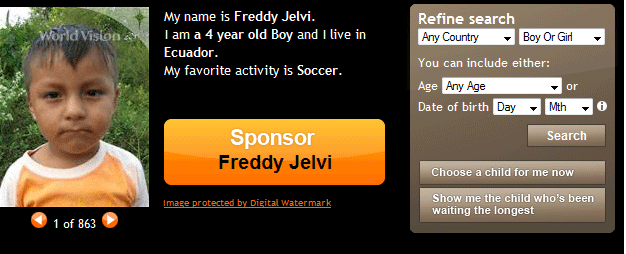
Child sponsorship: Off the shelf vs lucky dip.

Child sponsorship in theory is a great concept. A one-to-one relationship between the donor and the child. The ability for the donor to feel like more than just another dollar, and to see that their support alone is making an on the ground difference. Most people do now understand that the money does not go directly and only to the child, but instead to the community that supports them. Even with this knowledge, the process of sponsoring a child still gives people a sense of control over where their donation is going and an emotional connection with the child.

Child sponsorship is an income engine for development organisations. It strikes an emotional chord with potential donors, more so than program or emergency appeals. Behind the big brown eyes of the chosen child the money does get pooled and spent on community projects.

However, I have always struggled with how child sponsorship is portrayed to the public. In short, how the child is ‘marketed’ to a potential sponsor. A crass word to use when relating to supporting children who do genuinely require help, but a concept that must occur for these children and their communities to receive the support they need.

What level of ‘marketing’ is required and acceptable to encourage people to sponsor children?

Is it wrong to have all the pleading faces lined up on your computer screen so that you can flick through and select the cutest one with big brown eyes? Or is this a level of engagement that is necessary for the people who are attracted to child sponsorship to get that feeling of connection and control?
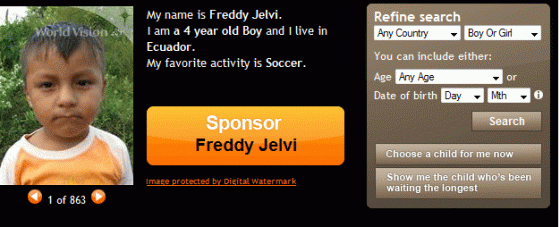
Is it natural to want to ‘see before you buy’?

Being able to choose the jacket in red over the jacket in blue. Even though you know they are the same design from the same material, but for no particular reason you just like red better. It is horrible to compare child sponsorship to online shopping. But people do have preferences. Even good people who want to sponsor children who do need their help. When committing to handing over money every month it is only natural to want to see what your money is going towards.

Lucky dip.

Some organisations do offer child sponsorship in absence of photos and information about the child. People choose to sponsor an anonymous child for $42 per month and only after the credit card details are entered the donor is allocated a child to sponsor. Thus removing the meat-market pre-purchase scenario (and the horrible risks associated with having photos of children online) but at the same time also removing the choice and control over where the money is going and the selective one-to-one relationship which is unique to child sponsorship. Does this un-marketed version still provide the same level of incentive to sponsor a child? If you do not see photos of the child and do not engage ‘pre-purchase’ are you still as likely to sponsor the unknown child?

So many questions and a personal moral dilemma.

For an organization to run sustainable long-term programs it needs a reliable income flow – which child sponsorship provides and I understand. In a bid to increase this income an online shelf of pleading children drives a higher level of emotional engagement and hence more donors. But to what point is it ok to market these children online? Should we just take the blue jacket, hand over our money and put the choice of where our dollar goes into the hands of the experts and bypass child sponsorship altogether. Yeah probably.

Yes. Raquel makes #GoBackSBS and we made the radio.

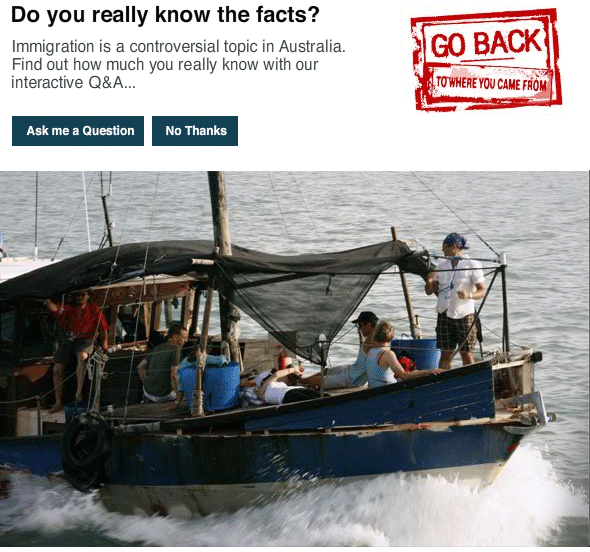
Yesterday we suggested that Go Back to Where you Came From becomes compulsory viewing for all Australians. That one of the biggest issues fuelling the ‘boat people’ debate is the lack of education. Through mainstream programming of the show it has the ability to humanise asylum seekers and give the public real insight into what it means to be a refugee.

The post generated a sea of chatter and yesterday afternoon we were contacted by 720 ABC Perth to discuss the idea of compulsory viewing and the interest #GoBackSBS is generating online.  @BryonyCole did a stellar job and you can listen to her interview over here.

The strength of the show lies in the mix of the characters.

As much as we may not like to admit, this handful of Australians does well to represent the majority. My brother summed it up superbly.

“At least Raquel stands by her convictions unlike the other wind socks who are shedding a tear with the refugees one minute then chasing them out of the bushes with batten yielding immigration police the next. Raquel is pretty full on and a bit of a sissy, but she is the only honest one there and is spot on with her comments regarding fixing the problem at the source. She does more for the show by raising the points she does in the way she does, although they may be difficult to swallow.”

Although where was Raquel in the ads for tonight…

Go back to where you came from: Superb, uncomfortable & influential (?) viewing.

Go back to Where You Came From last night was fantastic viewing and should be compulsory watching for all Australians. Superb work by SBS. But just how much impact can the show have without the reach of commercial television? After the three nights of the show are done will there be an outcry like was seen over live animal exports. Unfortunately, highly unlikely.

Would you send me back?

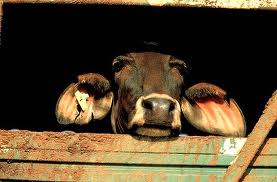
As mentioned on a blog post published by UNICEF last week – Why is it that so much more public outrage occurred in response to the treatment of live cattle being exported to Indonesia, compared to the deporting of people to Malaysia under the Gillard government’s refugee swap scheme?

One of the biggest issues is ignorance.

There is a definite lack of education. Which was clearly illustrated last night. How do people know if they don’t see.

Did you know that in 2010, Australia accepted 0.03% of the world’s refugees, asylum seekers and displaced people; of the 43.3 million refugees globally, we took just 13 750.

Go Back to Where you Came From is creating superb uncomfortable viewing that has the ability to humanise asylum seekers. Lets just hope that a commercial channel picks up Go Back in the near future so it reaches the minds of the masses that need to be educated.

Everyone loves a little test.

In the meantime send some mates who need a little education on the issue this great interactive Asylum Seeker fact tester which lives over on the SBS website. Also if you missed last night you can watch it here.

Finally, if you had fled war, terror, starvation… would you go back to where you came from? Highly unlikely. And do you think Raquel will survive her experience in Malaysia? Again, highly unlikely. Great viewing tonight indeed.

Twestival Tomorrow.

Tweet. Meet. Give.

What better way to use your love for online than to head down to your local twestival event.

This year Twestival is going ‘Local’ in cities around the world tomorrow, Thursday 24 March 2011. Events for Twestival Local will raise funds and awareness for local nonprofits that organizers identify for having an incredible impact within their own community.


Vegan Month

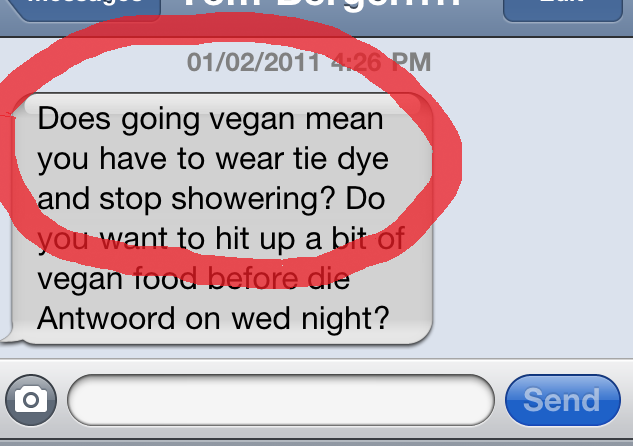
When I told friends I was going to try a vegan diet for February, the response was often:

Signing up for Vegan Month however, is about much more than wearing flares and cutting out eggs and sausages.

The brainchild of fellow Awesome Foundation Board Member Xavier Shay, Vegan Month is an immersive course which utilises small-scale communities, social media and mini-tasks to involve and educate its participants.

Weekly Vegan Dinners: Week 1, Soul Mama's St Kilda.

I managed to grab Xavier for his take on the program after dinner this week…

For more information, hit www.vegan-month.com

Follow Feb #veganmonth adventurers on Twitter:

If I could change the world this year…

Emerging from the food & beverage coma that is Christmas and New Year I am feeling inspired for the year ahead. Thanks to @davidahood and the instigation of the social change collaboratory &  this TEDx Talk by Peter Grzic from Oxfam, the following three questions have been circling the runway inside my head:

What do you care about?

What do you want to see change?

And…

What are you going to do about it?

I care about respect – for each other and the environment. I saw a guy get beaten up in Chapel st last night, and a man throw a cigarette butt out the window. I want this to change. So as my plans come to fruition for how I am going to positively impact those around me in 2011, and words like  ‘masters in international development’, ‘hablar mas espanol’, and a ‘worm farm on my balcony’ continue to circle in my head, what are you going to do?

In the words of Margaret Mead, “Never doubt that a small group of thoughtful, committed citizens can change the world. Indeed it is the only thing that ever has.”

Try to DoGood and you fail.

DoGooder done and dusted.

DoGooder was a plug-in for your browser that replaced traditional ads on the websites you visited with ads that raised money for good causes.

Sounds great.

As GOOD put it so eloquently in a post written earlier this year:

Which messages would you rather see while you were browsing online?

Buy a Chevy Malibu! Get the New American Express Gold Card! Watch the Real Housewives of New Jersey on Bravo! Eat ReddiWip!

Or:

Ride your bike to work. Support urban farms. Fertilize your garden with used coffee grounds. Donate your old phone. Pee in the shower.

But after just over a year of business, the Canadian company, DoGooder posted their final blog post and announced “it’s been a good run, but today we are shutting down our service indefinitely.”

It was an interesting idea. To swap ads that a visitor sees on a website so they are presented only socially-minded advertising. They aimed to give 50% of their profits to charity, and keep the other 50%. Sounds like a feasible business venture. But they needed a large network of people running their plug-in to attract the advertisers, and make the business profitable. Unfortunately the demand was not there, and in the end it was lack of income that resulted in the network closing.

Why did people not use DoGooder?

–       Felt they were stealing income from the site owners (by switching out ads, the income that would have been generated from click-throughs on the original ads would now go 50% to DoGooder and 50% to charity).

–       Too hard.

–       People like bad online advertising.

Whatever the reason, it is sad to see a charity supporting, socially-minded online business shut it’s doors.

If you didn’t have to do much, to do some good, would you? Hint: It would have taken 10 seconds and it was free.

Would you have used DoGooder?


The Chinese Twitter Jailbird.

This blog is usually a platform to voice all the positive ways that the online space is being leveraged to benefit society.

But @Melbourne_Muz brought this case of twittersphere injustice to my attention last week.

A woman in China was sentenced to a year in a labour camp for re-tweeting a message encouraging nationalist protestors to destroy Japan’s pavilion at the Shanghai Expo. (Check out the BBC article over here). Apparently her message was intended as a joke – but the Chinese government did not see it so.

As the BBC points out – this is a true example of how closely twitter, and all content online in general, is monitored by the Chinese government.

As the power of social media grows, so too must their worry and concern over how to control the individual voices & opinions it carries. An interesting space to watch indeed.

Hip-hop the vehicle for the Burmese voice of freedom?

The first generation of hip hop in Myanmar hit the streets in the early 90’s, via the beats of Acid.  A group of 4 guys who shifted a music scene that had been suffocating in Rock n’Roll for decades. They simultaneously provided a black market vehicle to voice political dissent for the youth of Burma.

The traditional structure of the Burmese society combined with the 50yrs of military rule are not a natural environment to embrace hip hop and the voice of freedom it carries.

Song lyrics are vetted by a censorship board for anti-government sentiment prior to being recorded, performances are regularly banned and artists have been arrested on political charges for being associated with the hip-hop scene. In short, avenues for music distribution are limited.

Enter the interwebs.


Thxa Soe – one of Burma’s leading hip-hop stars – and the underground group Generation Wave challenge the restrictions of the ruling military junta. An interview with Thxa Soe published in The Guardian earlier this year explains how he skates close to the edge of what is acceptable in the junta’s eyes, and his songs are regularly banned. The song titled ‘Water, Electricity, Please Come Back’ — an obvious comment on Rangoon’s inconsistent power supply — was forbidden. On a recent album, eight of the 12 tracks were forbidden. With bootleg copies of the album regularly seized by police, internet is the best medium of distribution. Even with limited and regulated access, the internet has helped spread the political messages wrapped within the beats of hip-hop.

Thxa Soe told The Guardian that he has chosen to stay in Burma, despite the risks, because he sees his voice as important in his homeland:

“It is very difficult being a musician in Myanmar. You are not free. You are always being watched, for what you say, and you are being told what you can say and what you cannot. [But] I believe music can change a country, not only our country, but the whole world.”

Links:

http://en.wikipedia.org/wiki/Burmese_hip_hop

http://www.mizzima.com/news/inside-burma/1512-detained-hip-hop-singer-yan-yan-chan-released.html

http://www.guardian.co.uk/world/2010/apr/22/burma-hiphop-resistance

http://en.wikipedia.org/wiki/Burma

http://www.guardian.co.uk/world/video/2010/apr/23/burma-hip-hop-challenge-junta